ANC vs Passive Noise Isolation for Airplane Travel: Which Actually Works Better?
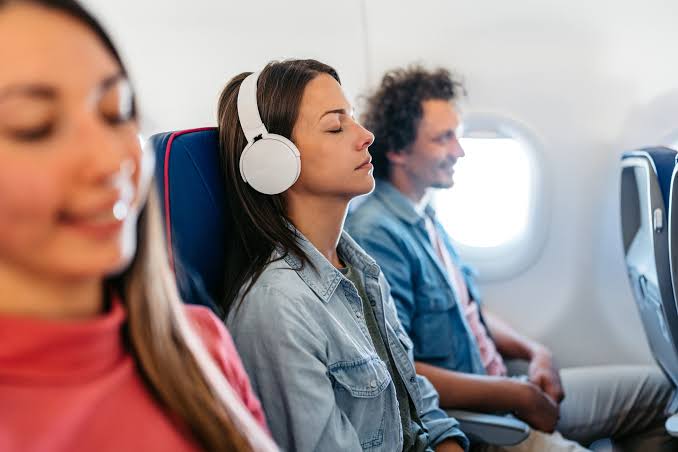
Airplane cabins are one of the most-cited use cases for noise-cancelling headphones, but ANC and passive isolation aren't interchangeable — they're good at cancelling completely different types of noise. Understanding the difference tells you which one (or whether you need both) actually solves your specific discomfort.
How Each Technology Works
Passive isolation works purely through physical blocking — dense padding, a tight seal (ear tips for IEMs, cushions for over-ear), and materials that physically prevent sound waves from reaching your ear canal. No electronics involved; it's the same principle as earplugs, just built into a headphone.
Active noise cancellation (ANC) uses microphones to sample ambient sound, then generates an inverted sound wave to electronically cancel it out before it reaches your ear. This is a real-time electronic process, not physical blocking.
Why This Matters Specifically for Flights
ANC excels at low-frequency, constant sound — and jet engine drone is almost exactly that: a steady, low-frequency rumble in the 20-100Hz range. This is the single best use case for ANC technology; it's genuinely dramatic how much engine noise disappears with good ANC engaged, far beyond what passive isolation alone achieves against this specific frequency range.
ANC struggles with sudden, irregular, high-frequency sound — a crying baby, conversation, a cart rattling down the aisle. These sounds change too quickly and unpredictably for the cancellation algorithm to track and invert effectively. This is why ANC headphones still let voices through even at max cancellation — it's a fundamental limitation of the technology, not a lesser product.
Passive isolation handles high-frequency and sudden sound better, because physical blocking doesn't care about frequency or predictability — a solid seal blocks sound regardless of its character. This is why a well-sealed IEM can sometimes make a crying baby feel more distant than ANC over-ears do, even though the over-ears win decisively on engine drone.
The Practical Answer for Flights
Engine noise fatigue (the dull, tiring hum that makes long flights exhausting): ANC is dramatically more effective. This is genuinely one of the best real-world use cases for the technology.
Cabin chatter, crying, general commotion: passive isolation (a deep, well-sealed fit) does more real work here than most people expect, and a good physical seal makes even mediocre ANC headphones perform noticeably better.
Best result: headphones or earbuds that combine both — a genuinely good physical seal plus ANC. The physical seal handles what ANC can't (irregular, high-frequency sound), and ANC handles what a seal can't fully block (constant low-frequency drone). Buying ANC headphones with a poor seal (common in some over-ear designs with shallow cushions) leaves real performance on the table.
One More Factor: Ear Pressure
Some flyers report ear pressure or discomfort specifically from ANC engaged during altitude changes (takeoff/landing), related to the pressure micro-adjustments the cancellation circuit makes. If you notice this, briefly disabling ANC during ascent/descent and re-enabling once cruising altitude is reached resolves it for most people — it's a known, minor side effect rather than a fault.
Reviewed by OmniReview
OmniReview is the editorial team behind Gear Rescue Guide. We build every guide from manufacturer documentation, published test standards, and long-term owner reports, and add our own hands-on impressions whenever we've had the chance to use the gear directly — we don't claim to have tested every product we cover. See our How We Review page for the full process.