Electric Bike Motor Types Explained: Hub Drive vs Mid Drive
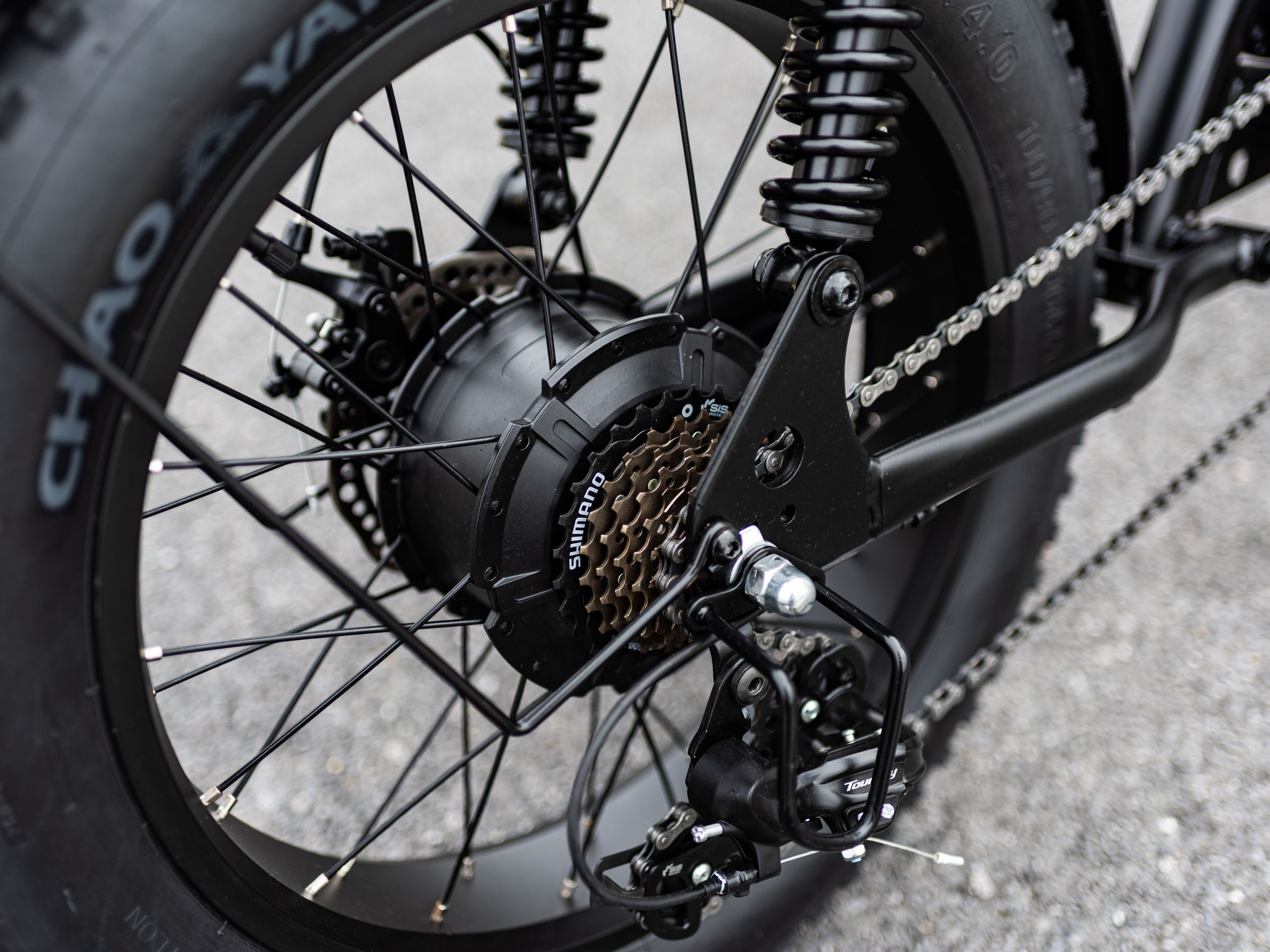
Photo: F x / Pexels
Shopping for an e-bike, you'll run into two very different motor layouts sold as if they were a minor spec difference: hub drive and mid drive. They're not interchangeable — where the motor sits changes how the bike climbs, how it handles, how loud it is, what it does to your drivetrain over time, and how much you'll pay. Here's what actually separates them, mechanically, so the price gap makes sense.
How Hub Drive Motors Work
A hub-drive motor is built directly into the wheel hub — usually the rear wheel, sometimes the front — and turns that wheel directly. There's no interaction with the bike's existing chain or gears: the motor spins the wheel, and your pedaling (if the bike has pedals at all) is a mostly separate input that just happens to also move the bike forward. This is mechanically simple, which is exactly why it's the dominant layout on budget and mid-range e-bikes.
How Mid-Drive Motors Work
A mid-drive motor mounts at the bottom bracket, between the pedals, and drives the bike's existing chain — the same way your legs do. Because power goes through the drivetrain, it also goes through your gears, which means the motor's output gets mechanically amplified or reduced by whichever gear you're in, just like your own pedaling force does. That single difference is the root of almost everything else that separates the two designs.
Power Delivery and Ride Feel
Hub motors typically pair with a cadence sensor, which detects that the pedals are turning at all and applies a preset amount of power — it doesn't measure how hard you're actually pushing. The result is power that arrives in a step, slightly delayed, and not proportional to your effort. Mid-drive motors almost always pair with a torque sensor, which measures actual pedaling force and scales assistance to match it in real time. That's why mid-drive bikes are consistently described as feeling more like a stronger version of you, while hub-drive bikes feel more like an on/off assist layered on top of pedaling.
| Factor | Hub Drive | Mid Drive |
|---|---|---|
| Power delivery | Cadence-based, less proportional | Torque-based, scales with effort |
| Hill climbing | Fixed torque at the wheel, struggles on steep grades | Uses bike's gearing, strong on steep grades |
| Weight distribution | Weight concentrated at one wheel | Weight centered near the frame's midpoint |
| Drivetrain wear | Chain/gears unaffected by motor | Motor torque adds wear to chain and cassette |
| Typical price | Lower | Higher |
Hill Climbing and Torque
Because a hub motor drives the wheel directly with no gearing in between, it delivers a fixed amount of torque regardless of terrain — on a steep grade, that fixed torque simply isn't enough, and the motor bogs down or draws heavily on the battery trying to compensate. A mid-drive motor's torque passes through the bike's own gears, so shifting to a lower gear multiplies the effective torque at the wheel the same way it does for a strong cyclist's legs. This is the main reason mid-drive is the standard choice for hilly terrain and loaded touring.
Weight Distribution and Handling
A rear hub motor puts several extra pounds of unsprung weight at the back wheel, which can make the bike feel back-heavy — noticeable when lifting the bike, cornering hard, or riding on loose surfaces where wheel weight affects traction and steering feel. A mid-drive motor sits low and near the bike's center, close to where a rider's own mass is concentrated, which keeps the bike's handling closer to a standard bicycle's. For commuting on flat pavement this difference is minor; for off-road or technical riding, it's more noticeable.
Maintenance and Long-Term Reliability
Hub motors are mechanically isolated from the drivetrain, so they don't add wear to your chain, cassette, or derailleur — that whole system ages exactly as it would on a regular bike. Mid-drive motors route their power through the chain and gears, which means both wear out faster than they would under human power alone, especially the cassette and chain, which typically need replacing more often on a heavily-used mid-drive bike. On the other hand, hub motors are harder to service — a failed hub motor often means removing and shipping the entire wheel — while mid-drive units are more accessible and, on major brands, more standardized for repair.
Price and Where Each Type Makes the Most Sense
Hub-drive bikes are generally less expensive to manufacture and buy, and they're a reasonable choice for flat-terrain commuting, casual riding, and buyers who mainly want an occasional boost rather than a bike that rides like an extension of their own legs. Mid-drive bikes cost more — the torque sensor, gear integration, and more complex motor mount all add cost — but they're the better choice for hilly routes, longer rides, loaded cargo or touring use, and anyone who wants power that responds proportionally to effort rather than switching on and off.
Bottom Line
Hub drive and mid drive aren't a "budget vs premium" version of the same thing — they're different mechanical approaches with real trade-offs. Choose hub drive for simpler, cheaper, lower-maintenance flat-terrain riding; choose mid drive if you're regularly climbing hills, carrying load, or want power that feels proportional to your own pedaling effort.
Reviewed by OmniReview
OmniReview is the editorial team behind Gear Rescue Guide. We build every guide from manufacturer documentation, published test standards, and long-term owner reports, and add our own hands-on impressions whenever we've had the chance to use the gear directly — we don't claim to have tested every product we cover. See our How We Review page for the full process.