Fat Tire vs Road Tire E-Bikes: Choosing the Right Setup
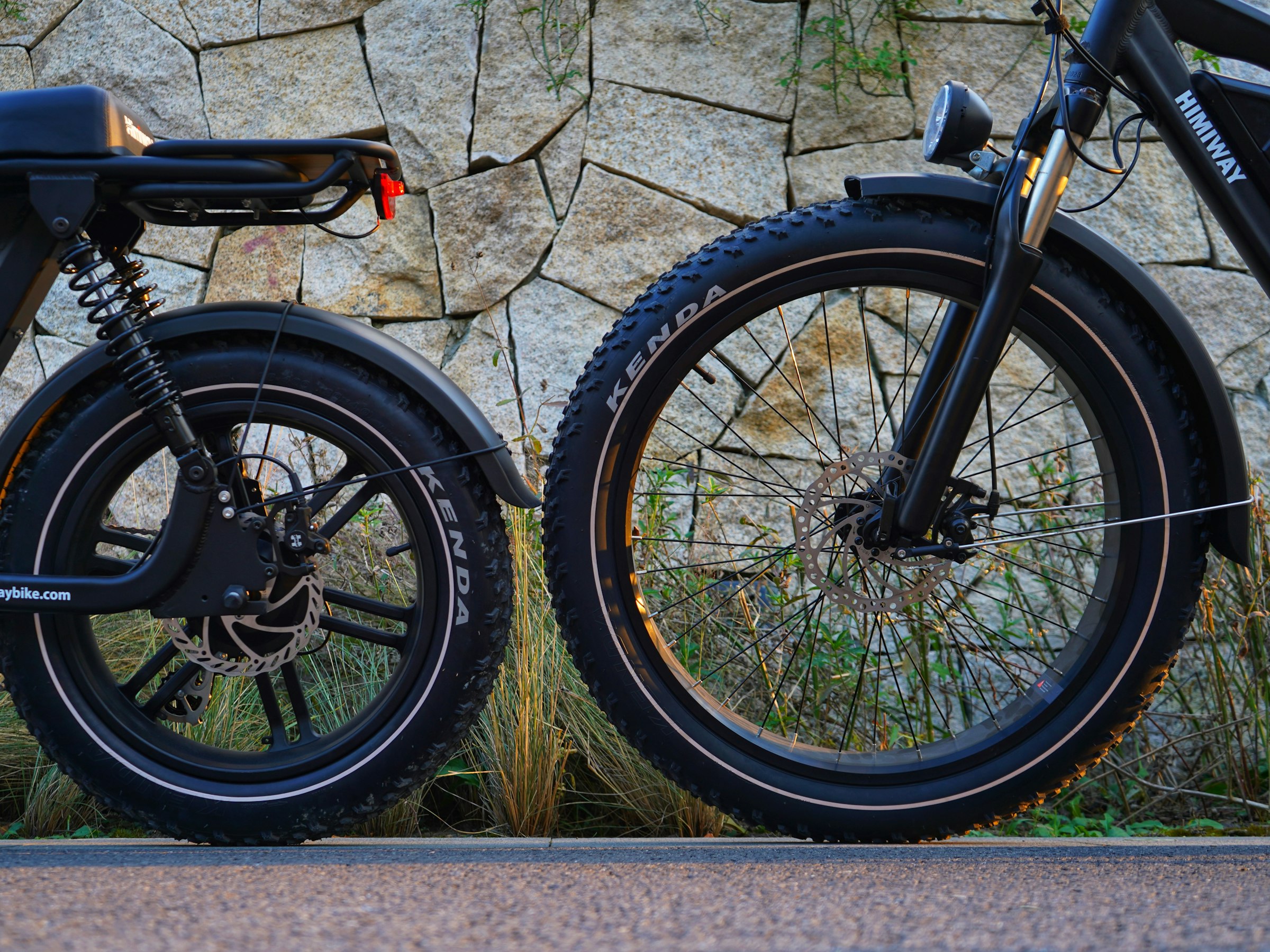
Photo: Himiway Bikes / Unsplash
Fat tire e-bikes have become one of the most heavily marketed styles in the category, often positioned as the rugged, do-anything option. But a wide, aggressive tire isn't a strict upgrade — it trades away real performance elsewhere, and for a lot of riders a standard road/street tire is actually the better-performing choice. Here's what tire width and tread actually change.
What Actually Changes With Tire Width
A wider tire has more air volume and a larger contact patch with the ground, which increases traction and lets you run lower pressure without pinch-flatting — both genuinely useful on loose, soft, or uneven surfaces. That same width and volume also increases rolling resistance and aerodynamic drag compared to a narrower tire, which is the direct trade-off: more grip and cushioning against more effort required to maintain the same speed.
Fat Tires: Traction, Stability, and the Trade-offs
Fat tires (typically 3.5-4.8 inches wide) excel on sand, snow, loose gravel, and rough unpaved trails, where their large contact patch and low pressure let them float over terrain that would bog down a narrower tire. The trade-off is real: fat tires roll noticeably slower on pavement, draw more from the battery to maintain speed (directly reducing range), and add rotational mass that makes the bike feel less responsive to accelerate and turn.
Road/Street Tires: Efficiency and Range Trade-offs
Narrower, smoother-tread tires (commonly 1.5-2.3 inches) roll with significantly less resistance on pavement, which translates directly into more range per charge and less motor draw to hold a given speed — the motor is doing less work fighting the tire. The trade-off shows up off pavement: less traction on loose or wet unpaved surfaces, a harsher ride over potholes and rough pavement since there's less air volume to absorb impacts, and a higher pinch-flat risk at low pressure.
| Factor | Fat Tire | Road/Street Tire |
|---|---|---|
| Traction on sand/snow/loose terrain | Excellent | Poor |
| Rolling resistance on pavement | Higher — costs range and speed | Lower — better range and speed |
| Ride comfort over rough pavement | Better cushioning | Harsher without suspension |
| Handling responsiveness | Heavier, less nimble | Lighter, more responsive |
| Best use case | Snow, sand, unpaved trails, stability-focused riders | Commuting, paved paths, range/speed-focused riders |
Rolling Resistance and Its Effect on Range and Speed
Because rolling resistance is a direct, continuous energy cost the motor has to overcome at every pedal stroke and every throttle input, tire choice affects range in a way that's easy to underestimate — some riders see a meaningfully shorter range on fat tires versus street tires on the same bike and battery, purely from the tire swap, independent of terrain or assist level. If maximizing range or top speed on pavement is a priority, tire width matters as much as battery size.
Which Setup Fits Which Riding
Choose fat tires if you regularly ride sand, snow, loose gravel, or rough unmaintained trails, or simply want the extra stability and cushioning for casual, stability-first riding. Choose road/street tires if most of your riding is pavement, paved multi-use paths, or bike lanes, and you'd rather have more range and a livelier-feeling ride than off-road capability you won't use. Some riders split the difference with a mid-width "trail" or hybrid tire (roughly 2.4-3 inches), trading a bit of each extreme for a more balanced all-rounder.
Bottom Line
Fat tires buy traction and comfort on loose or rough terrain at the cost of range, speed, and handling responsiveness on pavement; road tires give up that off-road capability in exchange for meaningfully better efficiency and a livelier ride. Match the tire to where you'll actually ride most, not to which one looks more rugged in a listing photo.
Reviewed by OmniReview
OmniReview is the editorial team behind Gear Rescue Guide. We build every guide from manufacturer documentation, published test standards, and long-term owner reports, and add our own hands-on impressions whenever we've had the chance to use the gear directly — we don't claim to have tested every product we cover. See our How We Review page for the full process.