How to Layer Clothing for Cold Weather Hiking
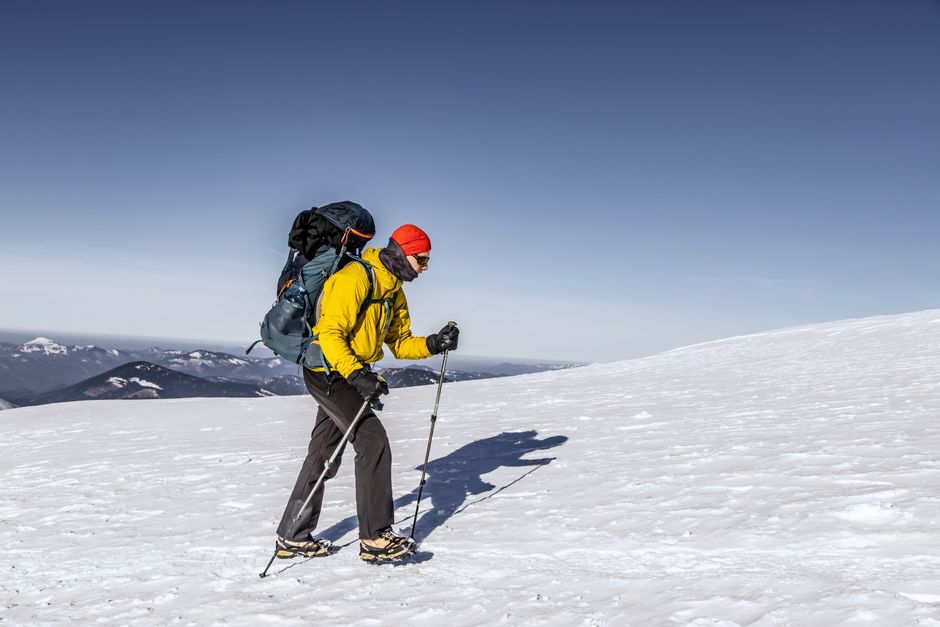
Photo: Jędrzej Koralewski / Pexels
You bundled up for a cold hike, felt fine while moving, and then got uncomfortably cold and clammy the moment you stopped for a break — or you sweated through your base layer within the first twenty minutes despite the freezing temperature. Both are extremely common, and both come down to the same misunderstanding: cold-weather discomfort is usually a moisture and timing problem, not a "not enough clothing" problem.
Why Layering Works the Way It Does
Base layer — moisture management. Its job is to move sweat away from your skin through capillary action, not to insulate on its own. This matters because insulation only works when it's dry: insulating materials trap warm air in their loft, and that trapped-air layer is the actual mechanism keeping you warm. Once a material is soaked, the air pockets collapse and insulating value drops sharply.
Mid layer — traps warm air. Fleece or synthetic/down insulation works by holding a layer of warm air near your body. Thicker loft traps more air, which is why a compressed, packed-down puffy insulates far less than the same jacket fully lofted.
Outer shell — blocks wind and precipitation. Wind stripping away the thin layer of warm air your body maintains against your skin — windchill — is a major and frequently underrated source of heat loss, independent of precipitation entirely. A windproof shell stops this even on a dry, cold, breezy day.
Cotton Kills — And This Is Why
Cotton absorbs moisture and holds onto it, losing nearly all of its insulating value once wet and drying extremely slowly compared to wool or synthetic fabrics, which retain a meaningful amount of insulating structure even when damp and dry much faster. This is the physical basis behind the well-known "cotton kills" warning in cold-weather hiking — it isn't superstition, it's a direct consequence of how the fiber holds water.
Start Cold, Not Warm
A widely repeated principle among experienced cold-weather hikers is "be bold, start cold" — if you feel comfortably warm standing at the trailhead before you start moving, you're overdressed, and you'll oversaturate your base layer with sweat within the first 15–20 minutes of exertion. Starting slightly cool and layering down once your body heat kicks in from movement keeps your base layer drier for the entire hike, which is more important to staying warm than any single layer's insulation rating.
Vent Before You Overheat, Not After
Use pit zips, front zippers, and cuffs to vent heat proactively during exertion, rather than waiting until you're already sweating to remove a layer. Repeatedly stopping to add and remove full layers wastes time and energy; a few seconds of unzipping accomplishes the same temperature regulation without breaking stride.
The Layer You're Probably Missing: The Static Layer
At rest stops, your body stops generating the metabolic heat that kept you warm while moving, but you're already slightly damp from exertion — this combination causes a fast core temperature drop the moment you stop. A heavier insulated "static" or belay-style jacket, thrown on immediately when you stop moving (before you feel cold, not after), addresses this directly and is one of the most overlooked pieces of a cold-weather layering system. If you're also using a sleeping bag on this trip, the same "trapped dry air" principle governs bag warmth — see our guide on why you're still cold in a 20°F sleeping bag for the overnight version of this problem.
| Layer | Purpose | Material examples |
|---|---|---|
| Base | Wicks sweat away from skin | Synthetic or merino wool |
| Mid | Traps warm air (active insulation) | Fleece, light synthetic puffy |
| Outer shell | Blocks wind, sheds precipitation | Windproof/waterproof-breathable |
| Static layer | Retains heat at rest stops | Heavier down or synthetic puffy |
Bottom Line
If you're consistently cold on winter hikes, the fix is almost never simply "buy a heavier jacket" — it's fixing moisture management at the base layer and adjusting layers proactively as your exertion level changes. Don't upgrade your insulation before addressing whether you're starting too warm, sweating through cotton, or skipping the static layer at rest stops; those three fixes solve the majority of cold-weather layering complaints on their own.
Reviewed by OmniReview
OmniReview is the editorial team behind Gear Rescue Guide. We build every guide from manufacturer documentation, published test standards, and long-term owner reports, and add our own hands-on impressions whenever we've had the chance to use the gear directly — we don't claim to have tested every product we cover. See our How We Review page for the full process.