Why Am I Cold in a 20°F Sleeping Bag? (And How to Actually Fix It)
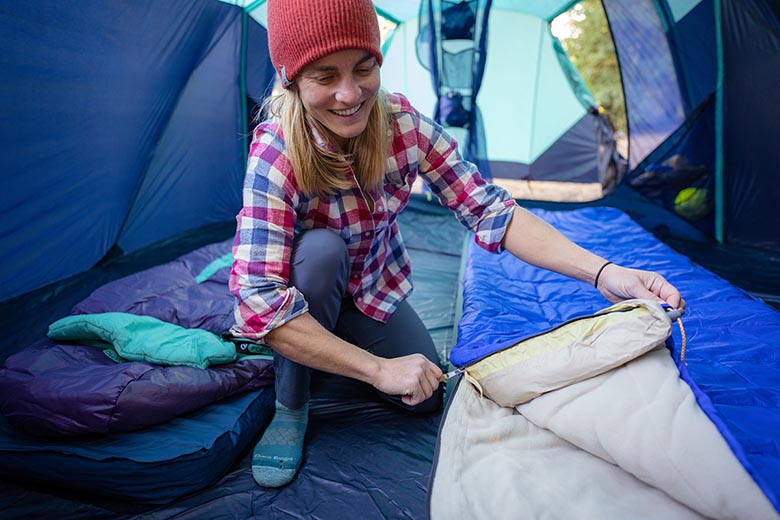
You bought a bag rated to 20°F, the forecast said 28°F, and you still woke up shivering at 3 AM. This is one of the most common complaints in backpacking gear reviews — and it's almost never the bag's fault. It's a misunderstanding of what the rating actually means.
The Rating Isn't What You Think It Is
Most sleeping bag temperature ratings follow the EN/ISO 23537 standard, which actually publishes three numbers, not one:
- Comfort rating — the temperature at which an average cold sleeper (often modeled as a woman) stays comfortable
- Lower limit — the temperature at which an average warm sleeper (often modeled as a man) stays comfortable in a curled position
- Extreme rating — survival only, not comfort
The number printed on the stuff sack or product page is almost always the lower limit, not the comfort rating. That gap can be 10–15°F. If you sleep cold, buying "to the rating" means you're buying to survive the night, not sleep well.
The Real Reasons You're Cold
1. Your sleeping pad's R-value is too low. Roughly half your heat loss on a cold night happens through conduction into the ground, not through the air. A 20°F bag paired with a pad rated R-2 will leave you cold no matter how good the bag is. Match pad R-value to season: R-3 to R-4 for shoulder season, R-5+ for winter.
2. You went to bed cold, not warm. A bag traps and reflects your body heat — it doesn't generate its own. If you crawl in already chilled, the bag has to work overtime to bring your core temp back up, and it may not get there before you fall asleep. Do a few minutes of light movement before getting in, and change out of any sweat-damp clothing first.
3. You're wearing too much (or the wrong thing). Compressing the insulation with bulky clothing reduces loft, which reduces warmth. A thin base layer plus a warm hat usually outperforms a stuffed puffy jacket inside the bag.
4. Down loft has degraded. Down loses loft over time if stored compressed, or if it's absorbed moisture without a full dry-out. If a bag that used to keep you warm suddenly isn't, check the loft — it should spring back to near its original thickness within a few minutes of being unpacked.
5. You're a genuinely cold sleeper. This isn't a flaw, it's physiology — lower body fat percentage, poor circulation, or just individual variation all affect this. If that's you, buy 10–15°F below the lowest temperature you expect, not to the exact forecast.
The Fix, in Order of Impact
- Upgrade your pad's R-value before upgrading your bag
- Eat a snack before bed — digestion generates heat
- Use a liner for an extra 5–15°F depending on material
- Keep a hat on; a huge percentage of heat loss is through the head
- If none of that closes the gap, the bag itself is likely underrated for your body — size down the temperature rating, not up
The takeaway: a "20°F bag" is a lower-limit survival number for an average sleeper, not a comfort guarantee for you specifically. Buy for your actual sleep style, not the label.
Reviewed by OmniReview
OmniReview is the editorial team behind Gear Rescue Guide. We build every guide from manufacturer documentation, published test standards, and long-term owner reports, and add our own hands-on impressions whenever we've had the chance to use the gear directly — we don't claim to have tested every product we cover. See our How We Review page for the full process.