Planar Magnetic vs Dynamic Driver Headphones: Which Is Actually Better?
Spend enough time in headphone forums and you'll see planar magnetic drivers treated like an automatic upgrade over "regular" dynamic drivers. That's an oversimplification. Each design has real, physical tradeoffs — here's what actually differs and which one fits your use case.
How Each Driver Works
Dynamic drivers use a voice coil attached to a diaphragm, moving inside a fixed magnetic field — the same basic principle as a traditional speaker, shrunk down. It's the design used in the vast majority of headphones because it's efficient to drive, cheap to manufacture at scale, and can produce strong bass from a small size.
Planar magnetic drivers use a thin, flat diaphragm with a conductive trace printed on it, sandwiched between arrays of magnets. Instead of one point of force (the voice coil), the entire diaphragm surface is driven evenly. This more uniform driving force is what gives planars their reputation for controlled, low-distortion sound.
The Real Differences
Distortion and detail: Because the whole diaphragm moves together rather than pivoting from a central point, planar drivers tend to produce lower distortion, especially at higher volumes. This shows up as cleaner separation between instruments and a sense of "effortless" detail — the sound most audiophiles are chasing when they say a headphone sounds "fast."
Bass character: Dynamic drivers tend to produce punchier, more physically felt bass — good for hip-hop, EDM, anything where you want impact. Planar bass is typically more controlled and textured but less visceral; some listeners describe it as "flatter" or less exciting for bass-heavy genres.
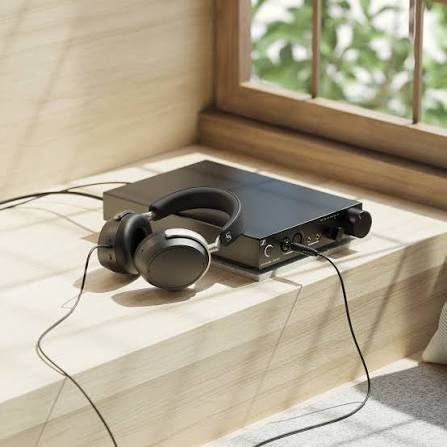
Power requirements: This is the practical dealbreaker for a lot of buyers. Planar magnetic headphones are almost universally harder to drive — they need significantly more power to reach comfortable listening volumes. Most planars are unlistenable straight out of a phone jack or laptop and require a dedicated headphone amp or a DAC/amp combo. Dynamic drivers, by contrast, are usually designed to work fine straight out of a phone.
Weight and comfort: The magnet arrays needed for planar drivers make headphones noticeably heavier — often 450–550g versus 250–350g for comparable dynamic-driver headphones. Long listening sessions can become a comfort issue, particularly for side sleepers or glasses wearers.
Price: Entry-level planar magnetic headphones typically start around $200–300, meaningfully higher than entry-level dynamic drivers, because the driver itself is more complex and expensive to manufacture.
Which One Should You Buy
Choose dynamic drivers if: you want to plug directly into a phone or laptop with no extra gear, you prioritize bass impact for bass-heavy genres, or you want a lighter, more portable headphone.
Choose planar magnetic if: you already have (or are willing to buy) a headphone amp, you primarily listen to acoustic, classical, or detail-oriented genres, and you're doing critical listening or mixing where low distortion matters more than raw bass punch.
Neither is objectively "better" — they're optimized for different priorities, and the amp requirement alone rules planars out for a lot of casual listeners regardless of sound quality.
Reviewed by OmniReview
OmniReview is the editorial team behind Gear Rescue Guide. We build every guide from manufacturer documentation, published test standards, and long-term owner reports, and add our own hands-on impressions whenever we've had the chance to use the gear directly — we don't claim to have tested every product we cover. See our How We Review page for the full process.