Why Does My Step Count Differ Between Phone and Watch?
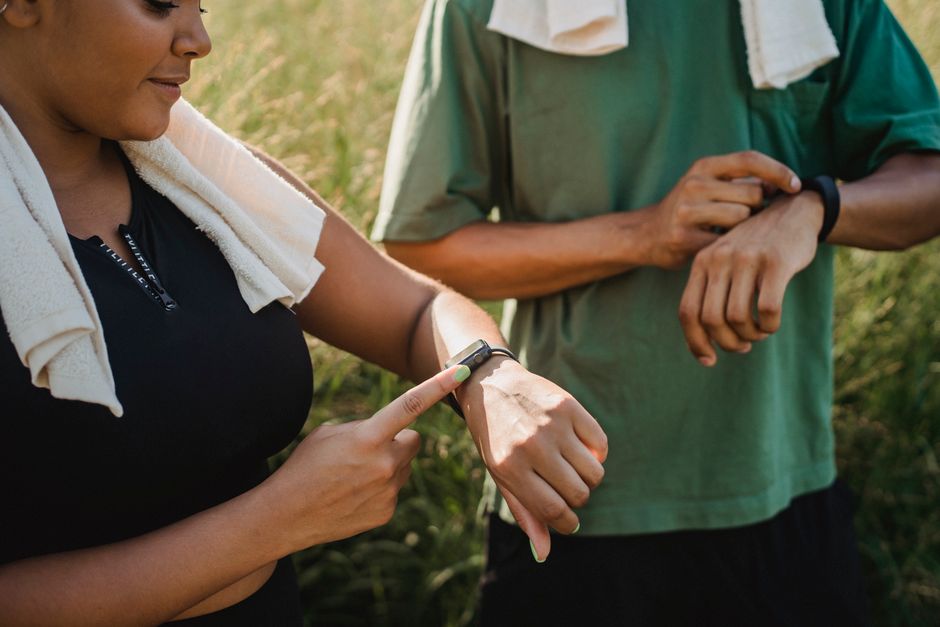
Photo: Ketut Subiyanto / Pexels
You check your phone at the end of the day and it says 6,200 steps. You check your watch and it says 8,100 steps for the exact same day. Neither device is broken — they're measuring different physical signals in different places on your body, and disagreement between them is the expected outcome, not a glitch.
Two Different Sensors, Two Different Signals
Your phone infers steps from how it's being carried. Its accelerometer picks up the rhythmic bounce pattern typical of walking while the phone is in a pocket or bag moving with your body. This works reasonably well when the phone is on you, but it systematically undercounts any time the phone isn't physically moving with your gait — left on a desk, sitting in a bag that isn't swinging, or set down during a walk-heavy task at work.
Your watch infers steps from wrist motion. Because it's worn continuously on your body, it captures a different signal entirely: the swing pattern of your arm during a normal walking gait, using an accelerometer and often a gyroscope tuned specifically for wrist movement. This tends to stay more consistent throughout the day simply because the watch never leaves your wrist, but it's vulnerable to a different kind of error — arm motions that resemble a walking swing without actual steps (pushing a stroller, cleaning, gesturing while talking) can register as steps, while activities where your arms stay still (pushing a shopping cart, using trekking poles, carrying a bag with a fixed grip) can undercount real steps.
Neither Number Is "Ground Truth"
It's tempting to assume one device is accurate and the other is wrong, but both are statistical estimates built from motion-pattern algorithms calibrated against typical gait signatures — not a direct count of your feet touching the ground. This is structurally similar to why heart rate readings vary between a wrist sensor and a chest strap: different sensor placement, different signal, different algorithm, and a real, expected gap between the two rather than one being definitively correct.
The Typical Pattern
In general, watches tend to slightly overcount from non-gait arm motion, while phones tend to undercount on days when they're not consistently carried on your body — sitting on a desk during long stretches of an office day, for example, while your watch stays on your wrist recording every step you take to the printer or the break room.
What Actually Matters: Consistency, Not Agreement
If your goal is tracking activity trends over time — are you moving more this month than last — pick a single device as your source of truth and stick with it, rather than trying to reconcile two numbers that were never measuring the same thing. Comparing a phone's carry-pattern estimate against a watch's wrist-swing estimate on the same day tells you very little; comparing your watch's numbers to your watch's numbers from a month ago tells you something real.
For casual step-goal tracking, a 10–20% gap between devices doesn't meaningfully change whether you're hitting your activity targets. For anything more precise — training load tracking, syncing with a structured program — pick one device and use it exclusively rather than trying to average or validate one device against the other.
Bottom Line
A step count mismatch between your phone and watch is expected sensor-placement and algorithm disagreement, not a malfunction in either device. Don't spend time trying to figure out which number is "right" — pick the device you wear most consistently, track its trend over weeks and months, and ignore day-to-day discrepancies against a second device measuring a completely different signal.
Reviewed by OmniReview
OmniReview is the editorial team behind Gear Rescue Guide. We build every guide from manufacturer documentation, published test standards, and long-term owner reports, and add our own hands-on impressions whenever we've had the chance to use the gear directly — we don't claim to have tested every product we cover. See our How We Review page for the full process.