Heart Rate Accuracy on Fitness Wearables: When to Trust the Number
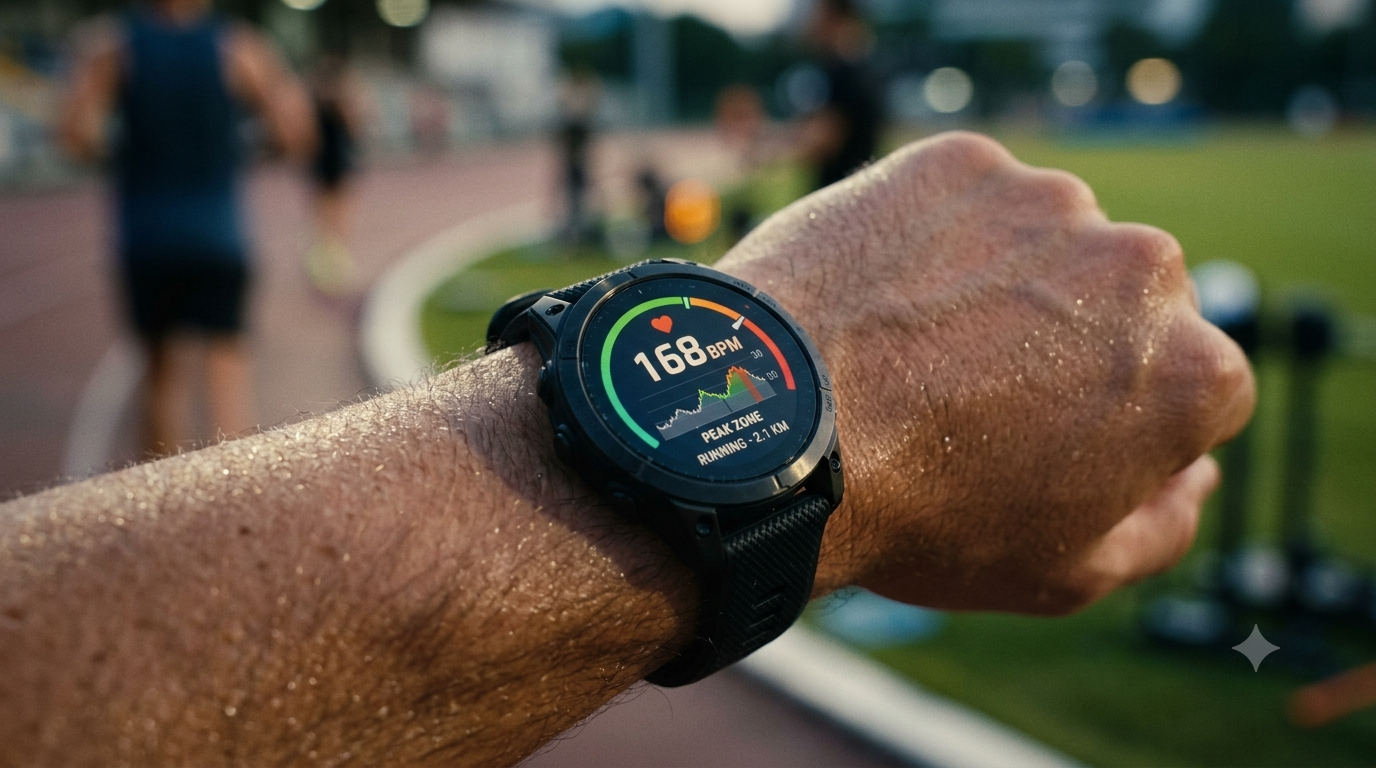
Heart rate is the metric most training decisions are built on — zone training, recovery scores, calorie estimates, and VO2 max all depend on it. So it matters that wrist-based heart rate monitoring is reliable in some situations and notably unreliable in others. Here's when to trust your wearable's number and when to be skeptical.
How Wrist-Based Heart Rate Works
Nearly all fitness wearables use photoplethysmography (PPG): green LEDs shine light into your skin, and a sensor measures how much light is reflected back. Blood absorbs light, so the reflected signal fluctuates with each heartbeat. An algorithm converts those fluctuations into a beats-per-minute reading.
Chest straps work differently — they measure the heart's electrical activity directly (the same principle as an ECG), which is why they remain the accuracy benchmark.
Where Wrist Sensors Perform Well
Optical wrist sensors are generally reliable for:
- Resting heart rate — stable conditions, minimal movement, consistent skin contact
- Steady-state cardio — running or cycling at a consistent pace, where heart rate changes gradually
- Overnight monitoring — you're still, and the readings have time to stabilize
- Long-term trends — even with some error, consistent measurement over weeks shows real directional change
If you're tracking resting heart rate trends or doing steady zone-2 work, the wrist reading is usually good enough for practical purposes.
Where Wrist Sensors Struggle
High-intensity intervals. Rapid heart rate changes are where optical sensors lag most noticeably. The algorithm needs a few seconds of clean signal to lock on, so during short intervals the reading may be catching up rather than reporting your current rate.
Strength training. Gripping bars and dumbbells flexes the wrist muscles and tendons directly beneath the sensor, disrupting the optical signal. Weightlifting is one of the least reliable use cases for wrist-based HR — see our full breakdown of why your smartwatch heart rate is wrong during weightlifting.
Cold weather. Reduced peripheral blood flow in cold conditions weakens the optical signal considerably.
Loose fit or wrong wrist position. Any gap between the sensor and skin lets in ambient light and movement artifacts. The watch should sit snug and about a finger's width above the wrist bone — not loose on the bone itself.
Certain skin tones and tattoos. Green light absorption varies, and dense tattoo ink over the sensor area can significantly interfere with readings. Some newer devices add different wavelengths to help, but this remains a known limitation — see our full analysis of fitness tracker accuracy for tattooed wrists.
Cadence lock. A well-documented failure mode where the sensor mistakes your running or cycling cadence for your heart rate, producing a stable-looking but wrong number. If your HR reading suspiciously matches your steps-per-minute, this is likely what's happening.
Practical Steps to Improve Accuracy
- Wear it snug and slightly higher up the arm — above the wrist bone, tight enough that it doesn't slide but not uncomfortable
- Clean the sensor and your skin — sweat, lotion, and dirt all interfere with the optical signal
- Warm up before relying on readings in cold weather
- Use a chest strap for interval and strength work if precision matters; most watches can pair with one via Bluetooth
- Sanity-check obviously wrong numbers — if the reading says 175 bpm while you're walking, it's an artifact, not a health event
When Accuracy Actually Matters
| Use case | Wrist accuracy sufficient? |
|---|---|
| Resting HR trends over weeks | Yes |
| Zone 2 / steady cardio | Usually yes |
| Sleep and recovery tracking | Generally yes for trends |
| HIIT and interval training | Often not — consider a chest strap |
| Strength training | Frequently unreliable |
| Medical concerns or symptoms | No — see a doctor, not a wearable |
Heart rate accuracy issues during strength work and intervals are part of a bigger pattern — see our breakdown of fitness wearables by activity for how sensor reliability shifts depending on what sport you're tracking.
An Important Limitation
Consumer wearables are fitness devices, not medical instruments. Some models include ECG features cleared for specific purposes, but a general heart rate reading is not a diagnostic tool. If you're experiencing chest pain, unexplained palpitations, dizziness, or shortness of breath, that's a reason to see a doctor regardless of what your watch displays.
Final Thoughts
Wrist-based heart rate is genuinely useful for steady-state training, resting trends, and long-term monitoring — and genuinely unreliable during intervals and strength work. Know which category your training falls into, wear the device correctly, and add a chest strap if your training depends on precision. The number is a tool, not a verdict. If you also want to know how much to trust the sleep stage data built on top of that same sensor, see our analysis of sleep tracking accuracy on fitness wearables.
Reviewed by OmniReview
OmniReview is the editorial team behind Gear Rescue Guide. We build every guide from manufacturer documentation, published test standards, and long-term owner reports, and add our own hands-on impressions whenever we've had the chance to use the gear directly — we don't claim to have tested every product we cover. See our How We Review page for the full process.