Why Is My Sleep Score Bad When I Feel Fine?
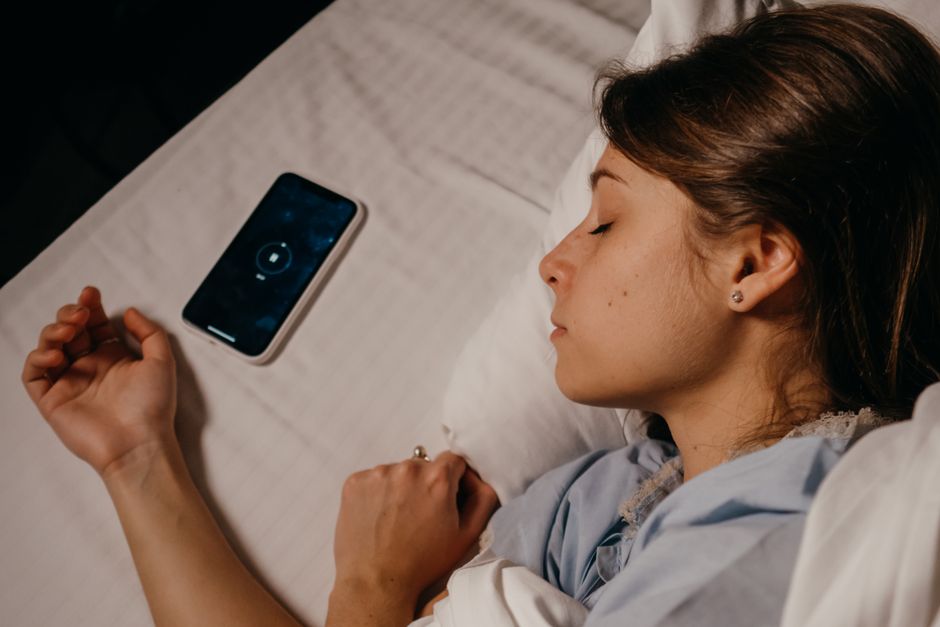
Photo: Polina / Pexels
You wake up feeling genuinely rested, check your watch or ring, and it hands you a disappointing sleep score with a note about restlessness or low deep sleep — and it's hard not to second-guess how you actually feel. The mismatch is common, and it comes down to the gap between what a wearable can measure and what "feeling rested" actually involves.
What Wearables Are Actually Measuring
Wrist and finger-worn devices infer sleep stages from a combination of movement (via accelerometer, as a proxy for stillness), heart rate patterns, heart rate variability, and sometimes blood oxygen or breathing rate. This is fundamentally different from clinical polysomnography, the lab-based gold standard, which reads brainwave activity directly through EEG electrodes to classify sleep stages. A wearable's sleep staging is a statistical inference from indirect physiological signals, not a direct read of what your brain is doing — and independent comparison studies consistently show real disagreement between different brands' algorithms on the same night of sleep.
Why the Score Can Drop Without You Noticing
Most sleep scores aren't a simple duration measurement — they're a weighted composite of total sleep time, estimated stage distribution (deep and REM percentages), movement and restlessness events, and sometimes overnight heart rate variability compared against your personal baseline. A single element landing slightly outside your normal range — a bit more movement than usual during a stage the algorithm expects to be still, a resting heart rate reading affected by strap position, a slightly later bedtime shifting your sleep cycle — can pull the composite score down even when your actual sleep was perfectly fine.
Why You Can Feel Rested Anyway
Subjective sleep quality depends on factors a wearable simply has no way to measure: how comfortable your sleep environment was, stress levels, caffeine timing, and general day-to-day physical and mental state. How rested you feel is a whole-body, partly subjective experience — it isn't fully reducible to movement and heart rate data, so a mismatch between the number and how you feel isn't evidence the device is malfunctioning, just evidence of its limits.
It's also worth knowing that a meaningful share of night-to-night score volatility is algorithm noise rather than a real physiological swing — a healthy sleeper's actual sleep architecture doesn't typically change drastically from one night to the next, even when the reported score does.
What to Actually Do With the Number
Don't react to a single night's score in isolation — look at the trend across several weeks instead. If your score is consistently low and it lines up with real, corroborating signs (you remember waking up multiple times, you're actually tired during the day, you have a hard time falling asleep), that's worth paying attention to. If it's an isolated confusing reading on a night you otherwise feel completely fine, it's most likely picking up on something like extra movement or HRV variation that never actually became noticeable fatigue.
A loose strap or poorly fitted ring can also inject noise into the heart rate and HRV data feeding the score, so if bad scores are frequent and unexplained, check fit before assuming something's physiologically wrong. For more on where wrist-based readings tend to struggle, see our guide on how accurate sleep tracking on fitness wearables really is.
When to Actually Be Concerned
Pay attention when low scores consistently correlate with real daytime symptoms — persistent fatigue, difficulty concentrating, or sleep issues you're independently aware of. A single "bad" score with no corroborating symptoms isn't something to act on; treat it as noise, not a diagnosis.
Bottom Line
A single night's sleep score conflicting with how you feel is common and doesn't mean the device is broken — trust the multi-week trend over any one reading. If your trend and your subjective experience roughly track together over time, the device is doing its job; a single confusing night isn't worth worrying about.
Reviewed by OmniReview
OmniReview is the editorial team behind Gear Rescue Guide. We build every guide from manufacturer documentation, published test standards, and long-term owner reports, and add our own hands-on impressions whenever we've had the chance to use the gear directly — we don't claim to have tested every product we cover. See our How We Review page for the full process.