How Accurate Is Sleep Tracking on Fitness Wearables? What the Data Can and Can't Tell You
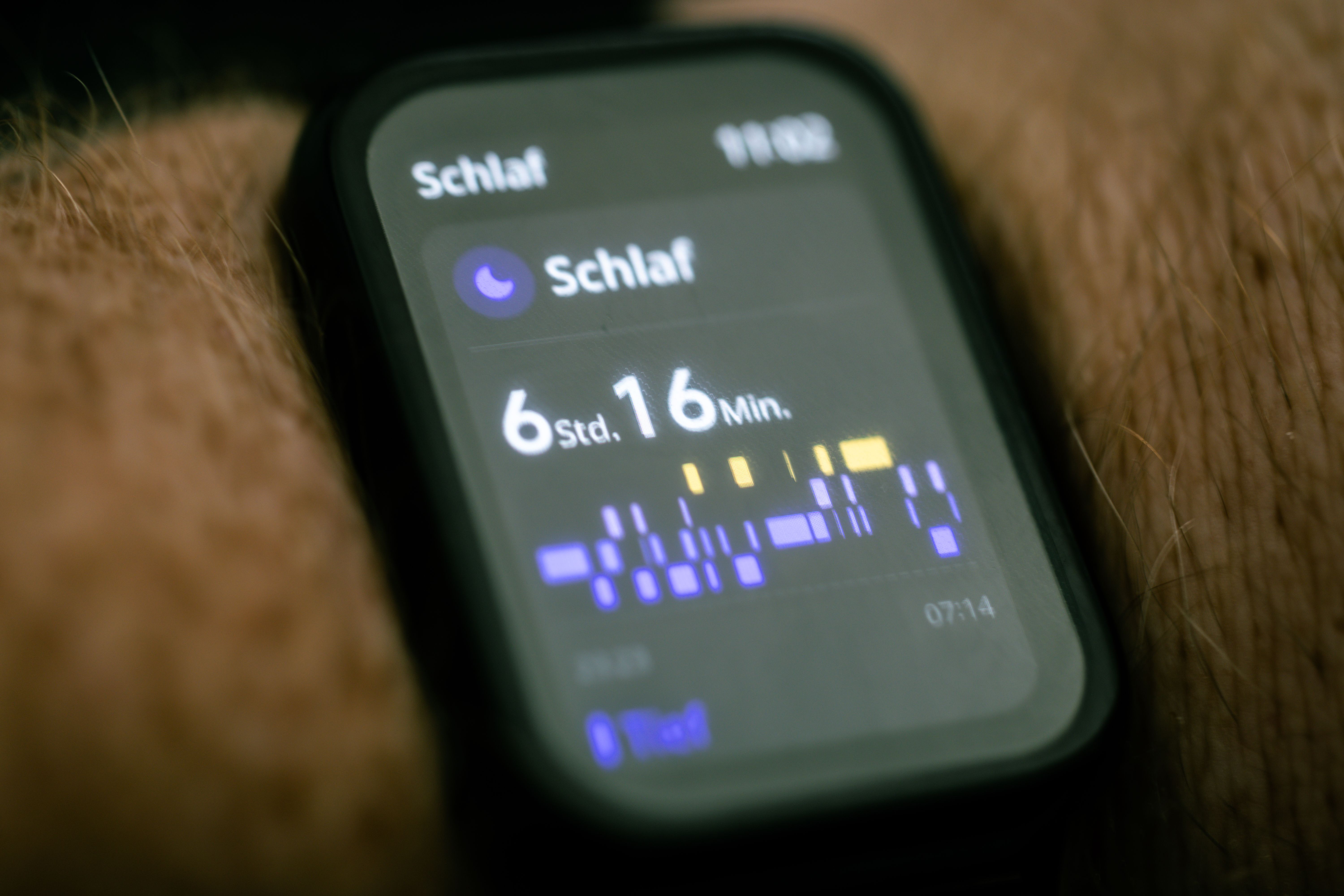
Sleep tracking has become one of the headline features on nearly every fitness wearable, complete with detailed breakdowns of REM, deep, and light sleep. But how much of that data is actually reliable — and how much should you act on? Here's an honest look at what wrist-based sleep tracking does well, and where it falls short.
How Wrist-Based Sleep Tracking Works
Clinical sleep studies (polysomnography) measure brain waves, eye movement, and muscle activity directly. Consumer wearables can't do any of that from your wrist. Instead they infer sleep stages from:
- Movement (accelerometer) — stillness suggests sleep, movement suggests wakefulness or light sleep
- Heart rate and heart rate variability — patterns in HR and HRV correlate with different sleep stages
- Sometimes blood oxygen and skin temperature — added signals to refine the estimate
The key word is infer. The device is running a model that guesses sleep stages from indirect signals, not measuring them directly. Wrist placement isn't the only option, either — see our comparison of smart ring vs smartwatch for sleep tracking for how finger-based sensors stack up for this exact kind of overnight inference.
What Wearables Get Reasonably Right
Independent research generally finds consumer wearables are decent at:
- Total sleep duration — how long you slept is usually within a reasonable margin
- Sleep timing — when you fell asleep and woke up
- Night-to-night trends — whether this week's sleep is better or worse than last week's
- Detecting major disruptions — long wake periods in the middle of the night
For most people, these are the metrics that actually matter for making practical changes.
What Wearables Get Less Right
Sleep stage breakdowns are where accuracy drops considerably:
- Distinguishing deep from light sleep is significantly less reliable than total duration
- REM detection varies notably between devices and between nights
- Brief awakenings are often missed, since lying still while awake reads as sleep to an accelerometer
- Cross-device comparison is meaningless — two brands can report substantially different stage breakdowns for the same night, because each uses its own proprietary model
If your wearable says you got 47 minutes of deep sleep, treat that as a rough estimate within a wide margin, not a measurement.
How to Actually Use the Data
The practical approach is to use sleep tracking for trends, not absolutes:
- Compare yourself to yourself, not to averages or to friends' numbers. The value is in your own week-over-week and month-over-month direction of travel.
- Watch total sleep duration and consistency first. These are the most reliable metrics and also the ones most strongly linked to how you actually feel.
- Correlate with how you feel, not just the score. If the app says you slept badly but you feel great, trust your body. The reverse is also true.
- Use it to test changes. Cutting caffeine after 2pm, changing room temperature, adjusting bedtime — track a few weeks before and after to see whether the trend moves.
Keep in mind that continuous overnight tracking — heart rate, SpO2, always-on sensors — is also one of the biggest drains on battery life. If your wearable is dying before it can log a full night, see our breakdown of fitness wearable battery life: marketing number vs. reality.
A Word on Sleep Scores
Most wearables now produce a single "sleep score" out of 100. These scores combine duration, stages, HR, and restlessness into one number using a proprietary formula. They're useful as a rough daily snapshot, but they're not a clinical assessment, and fixating on the number itself can create anxiety that makes sleep worse — a well-documented irony in sleep tracking.
When to See a Professional Instead
Wearable data is not a diagnostic tool. If you're consistently exhausted despite adequate sleep duration, snoring heavily, waking gasping, or experiencing significant daytime sleepiness, those are reasons to talk to a doctor rather than to buy a better wearable. A sleep study measures things no wrist device can.
Final Thoughts
Sleep tracking on wearables is genuinely useful for what it does well: showing you how much you're sleeping and whether that's trending in the right direction. Treat the detailed stage breakdowns as informed estimates rather than measurements, focus on your own trends over time, and remember that how you feel is still the most reliable signal you have. See how sleep tracking stacks up against other priorities in our guide to fitness wearables by activity. Sleep stage estimates lean on the same optical sensor as your daytime readings — see our analysis of heart rate accuracy on fitness wearables for when that sensor is, and isn't, reliable.
Reviewed by OmniReview
OmniReview is the editorial team behind Gear Rescue Guide. We build every guide from manufacturer documentation, published test standards, and long-term owner reports, and add our own hands-on impressions whenever we've had the chance to use the gear directly — we don't claim to have tested every product we cover. See our How We Review page for the full process.